

Growth can become messy when your business systems are not ready. Learn why a strong digital foundation helps teams work better, manage data clearly, and scale with more control.
Every growing business eventually reaches a point where “just making things work” is no longer enough.At the beginning, it is normal to use whatever tools are available. WhatsApp for communication. Spreadsheets for tracking. Notes for reminders. Email for approvals. A few different apps for sales, finance, operations, or customer support.
That setup can help the business move fast in the early stage. But as the business grows, the workflow becomes more complex. More customers come in. More team members get involved. More data needs to be tracked. More decisions need to be made quickly. This is where many businesses start to feel the pressure. The problem is not always lack of effort. In many cases, the team is already working hard. The real issue is that the business is growing on top of a weak digital foundation.
What Is a Digital Foundation?
A digital foundation is the basic structure that helps your business manage information, workflows, people, and processes in a more connected way. It is not just a website. It is not just an app. It is not just a dashboard. A strong digital foundation connects the important parts of your business so your team can work with clearer data, cleaner processes, and better visibility. It usually includes things like:
A clear place to store customer information
A structured workflow for enquiries, orders, projects, or services
User access based on roles and responsibilities
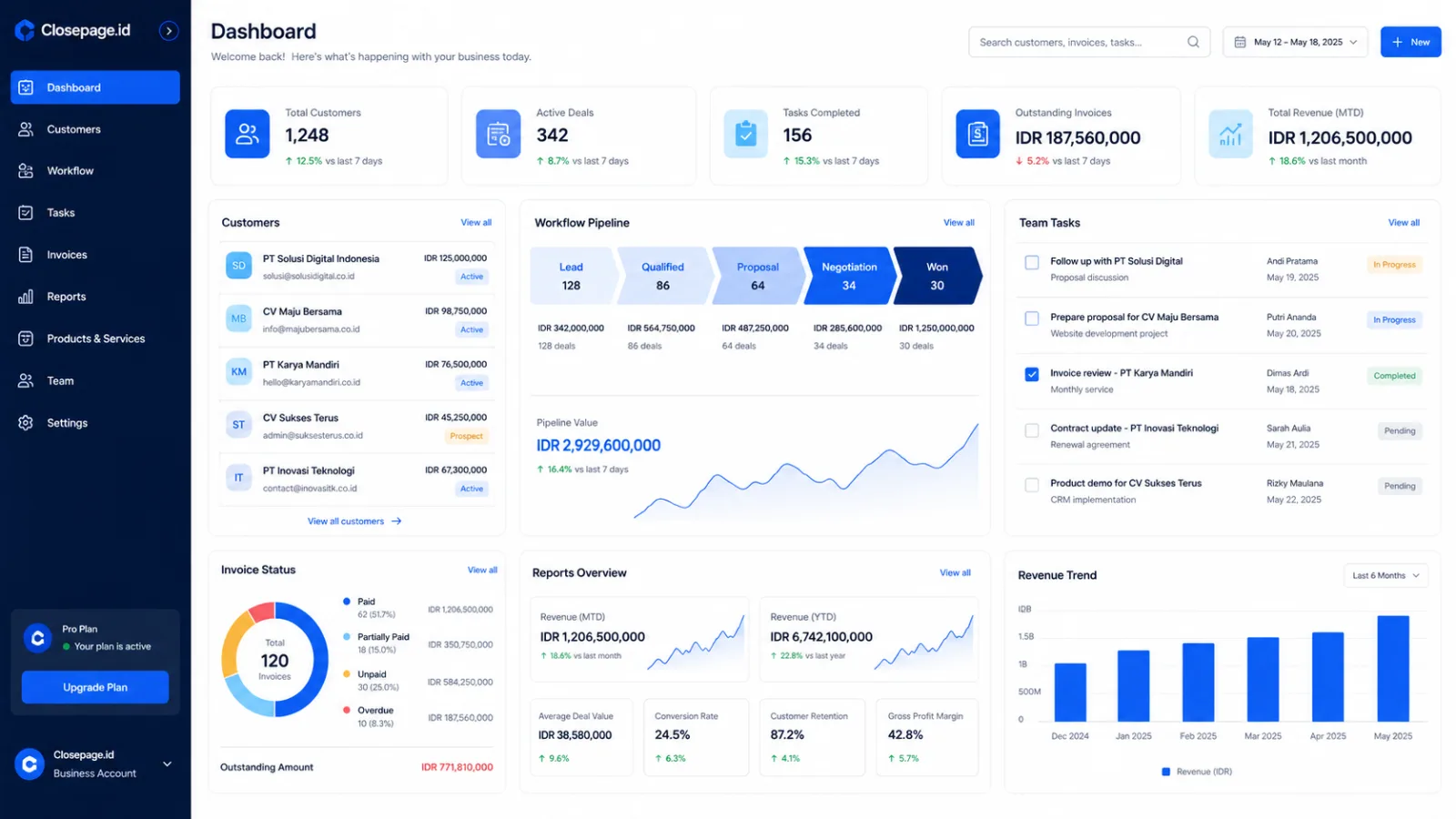
A dashboard to monitor activity and progress
A reporting structure for better decisions
Integration between important tools
A scalable system that can grow with the business
In simple terms, your digital foundation is what keeps your business organised when things start moving faster.
Why This Matters More Than Most Businesses Realise
Growth sounds positive, and of course it is. But growth also adds pressure. More customers mean more conversations to track. More orders mean more chances for mistakes. More employees mean more coordination. More services mean more processes to manage. Without the right foundation, growth can create confusion instead of progress. You may get more leads, but the team misses follow-ups. You may receive more orders, but the fulfilment process becomes messy. You may hire more people, but everyone still depends on one admin who knows where everything is. This is why digital foundation matters. It helps the business move from manual coordination to structured operations. Not perfect. Not overly complicated. Just more controlled.
A Weak Foundation Makes Growth Feel Heavy
Many businesses do not realise they have a weak foundation until the symptoms become obvious.
For example:
The team keeps asking for the latest file.
Customer updates are scattered across chats.
Reports take too long to prepare.
Tasks are not clearly assigned.
The same data is entered more than once.
Managers cannot see what is happening in real time.
Customers need to repeat the same information.
Simple decisions are delayed because the data is unclear.
At this stage, the business may look busy from the outside, but internally, the process feels heavy. People are working, but they are also searching, checking, confirming, reminding, and correcting. That is not scalable. A business should not need more manual effort every time it grows. It needs a better system.

The Main Parts of a Strong Digital Foundation
A good digital foundation does not need to be complicated. But it should be intentional. Here are the core parts every growing business should consider.
1. Clear Customer Data
Customer data is one of the most valuable assets in a business. But in many companies, customer information is spread across WhatsApp, spreadsheets, email, notebooks, and personal devices. That makes it difficult to answer basic questions like:
Who is this customer?
What did they ask for?
When was the last follow-up?
What product or service are they interested in?
Have they already paid?
What is their current status?
Who is handling them?
A stronger digital foundation gives the business one reliable place to manage customer information. This does not always mean a complex CRM from day one. It can start with a simple customer database or custom dashboard that fits the business workflow. The important part is consistency. When customer data is structured, the team can respond faster, follow up better, and avoid repeating the same questions.
2. Structured Workflow
A workflow is the path that work follows from start to finish. For example:
- An enquiry becomes a lead.
- A lead becomes a quotation.
- A quotation becomes a project.
- A project moves into production.
- Production moves into delivery.
- Delivery moves into payment and support.
When this workflow is not clearly defined, the team depends too much on memory and chat messages. A strong digital foundation makes the workflow visible. Everyone can see what stage each customer, order, project, or task is in. The team knows what needs to happen next. Managers can identify bottlenecks before they become bigger problems. This is where a web application or internal dashboard can create real business value. It turns the workflow into something the team can actually track.
3. Role-Based Access
Not everyone in the business needs access to everything. Sales may need customer and quotation data. Operations may need task and delivery details. Finance may need invoices and payment status. Management may need reports and overall performance. Role-based access helps each team member see the right information for their responsibility. This improves security, reduces confusion, and keeps the system easier to use. A good digital foundation does not only organise data. It also organises who can view, edit, approve, and manage that data.
4. Better Reporting and Visibility
A business owner should not need to ask five different people just to understand what is happening today.
With the right foundation, important information can be seen more clearly:
How many enquiries came in this week?
Which leads need follow-up?
Which projects are delayed?
Which invoices are unpaid?
Which products or services are performing well?
Which team activities need attention?
Clear reporting does not only save time. It improves decision-making. When data is visible, business owners can act faster and with more confidence.
Digital Foundation Is Not About Building Everything at Once
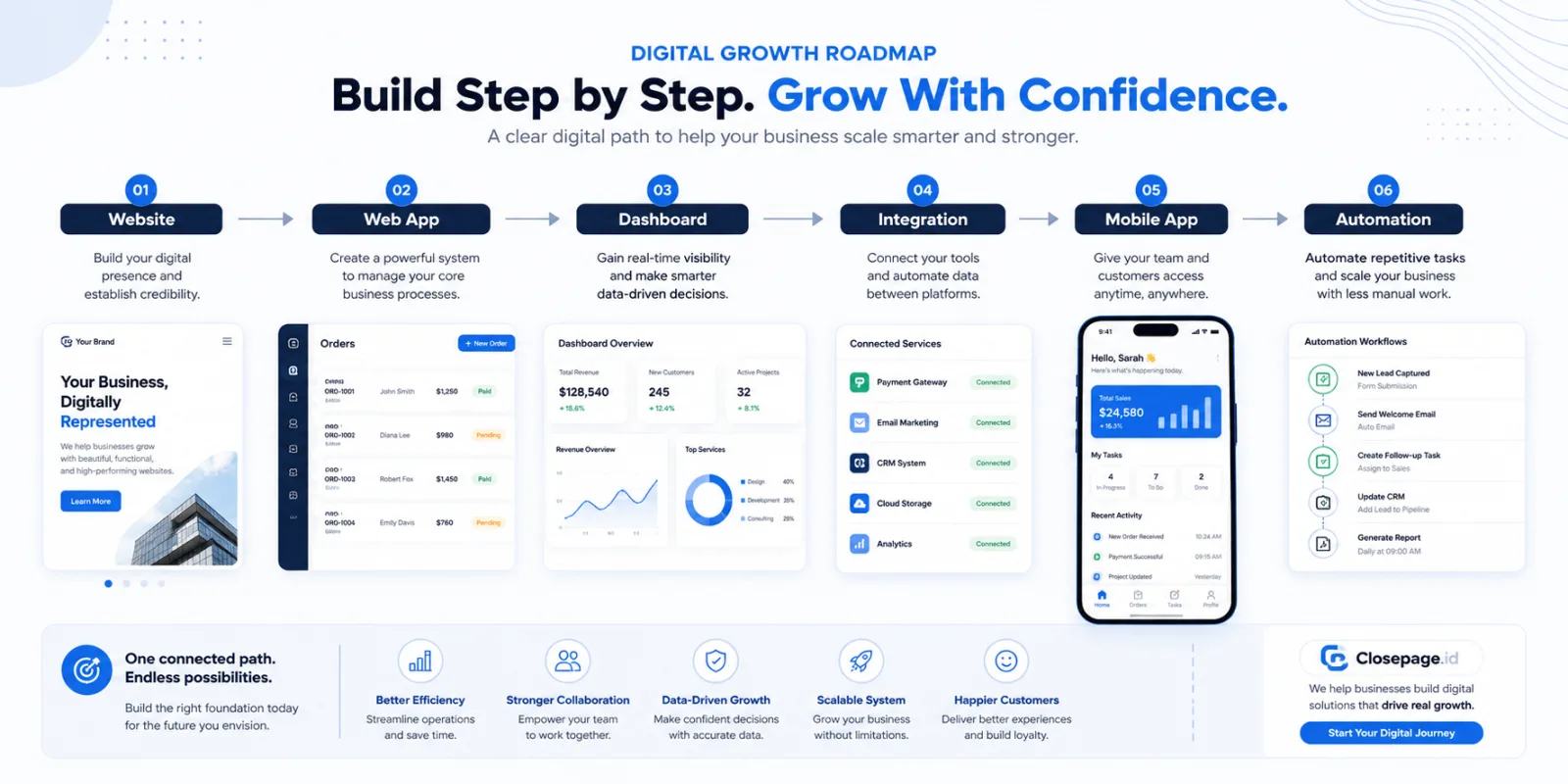
One common mistake is thinking that digital transformation means building a big, complex system immediately. That is not always necessary. A better approach is to start with the most important operational problem. For example, if customer follow-up is the biggest issue, start with a simple lead and customer tracking system. If reporting is the biggest problem, start by centralising the data needed for better reports. If operations are messy, start by mapping the workflow and building a dashboard around it. The goal is not to digitise everything at once. The goal is to build the right foundation step by step. This makes the process more manageable for the team and more efficient for the business.
Website, Web App, and Mobile App: Where Do They Fit?
A strong digital foundation can include different types of platforms depending on the business need.
Website
A website helps build trust, explain your services, show your portfolio, publish content, and bring in leads. It is usually the front door of your digital presence.
Web App
A web app helps manage the actual work behind the business. This can include dashboards, admin panels, booking systems, CRM, inventory systems, reporting platforms, project management systems, or customer portals. For many growing businesses, this is where the biggest operational improvement happens.
Mobile App
A mobile app is useful when users need fast, frequent, and smartphone-first access. It becomes more relevant when the business needs push notifications, GPS, camera access, field team activity, delivery tracking, customer engagement, or frequent mobile interaction. The key is choosing the right platform based on the problem, not based on trend. A mobile app may look impressive, but if the business process behind it is still messy, the app will only expose the mess faster.
The Right Foundation Makes Future Growth Easier
A strong digital foundation gives your business more room to grow. When customer data is organised, you can improve sales follow-up. When workflows are clear, you can reduce delays. When reporting is visible, you can make faster decisions. When roles are structured, teams can work with better accountability. When systems are scalable, new features can be added without starting over. This is important because digital systems should not only solve today’s problem. They should also support tomorrow’s growth.
A business may start with a simple dashboard today, then later add payment integration, WhatsApp automation, customer portal, mobile access, analytics, or AI-assisted workflows. That becomes much easier when the foundation is planned correctly from the start.
How to Know If Your Business Needs a Better Digital Foundation
Your business may need a stronger digital foundation if:
You use too many disconnected tools.
Your team often searches for the latest information.
Customer data is spread across chats, files, and personal notes.
Reports take too long to prepare manually.
Follow-ups are sometimes missed.
Tasks are not clearly owned by anyone.
Managers cannot see operational status in real time.
Your team repeats the same data entry in multiple places.
Growth makes the workflow feel more chaotic.
You are planning to build a custom system, app, or dashboard soon.
These signs do not mean the business is failing. They simply mean the current system is no longer enough for the next stage.
Start with Process Before Technology
Before building a new system, it is important to understand the process first. Many businesses jump straight into features:
“We need a dashboard.”
“We need a mobile app.”
“We need automation.”
“We need AI.”
Those things can be useful, but only when the business process is clear.
Start by asking:
What problem are we solving?
Who will use the system?
What information needs to be captured?
What workflow needs to be improved?
What decisions should the system help us make?
What should be automated later?
What needs to stay flexible as the business grows?
Good technology starts with good process thinking. When the workflow is clear, the system becomes easier to design, easier to use, and easier to scale.
Final Thoughts
A growing business needs more than just more tools. It needs a strong digital foundation. Without one, growth can create more confusion, more manual work, and more pressure on the team. With the right foundation, your business can manage customer data more clearly, structure workflows better, improve team accountability, and make decisions with better visibility. You do not need to build everything at once.
Start with the most important problem. Build the core system. Improve it based on real usage. Then expand it when the business is ready. That is how digital transformation becomes practical—not overwhelming.
Closepage.id helps businesses design and build digital foundations that support real workflows, from websites and web applications to dashboards, integrations, mobile apps, and custom operational systems built around how the business actually works.